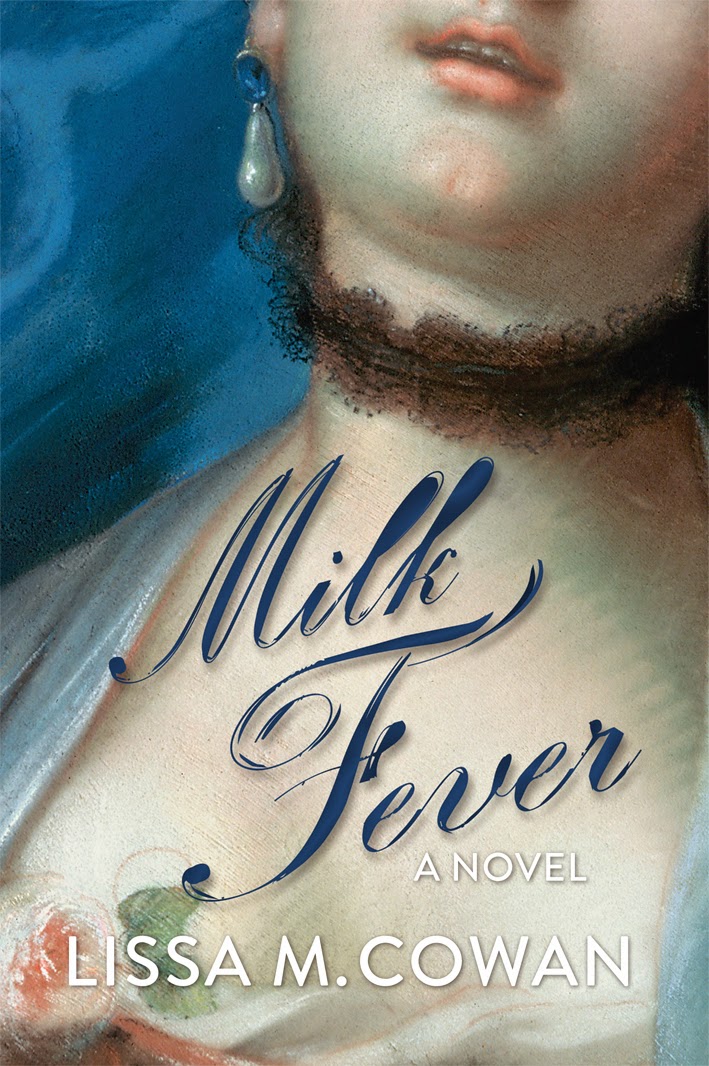
Lissa M. Cowan is the
author of Milk Fever and founder of
Writing the Body. She speaks and writes about storytelling, creativity,
work-life balance and creative spirituality. She is a Huffington
Post
blogger and writes regularly for Canadian and U.S. magazines and
newspapers.
She
is co-translator of Words that Walk in
the Night by Pierre Morency, one of Québec’s most honoured poets. She has been
writing and telling stories in one form or another since she was six years old
and has received awards for her writing from the University of Victoria’s Writing
Department and from The Banff Centre. She is an alumna of The
Banff Centre and The Victoria School of Writing. She has had some wonderfully
talented teachers along the way such as Nino Ricci, Jane Rule and Daphne
Marlatt who have helped her hone her writing craft.
Lissa
believes that inspiration for writing can come from anywhere and that lifelong
creativity begins by cultivating a deep awareness of ourselves, and the world
around us. She coaches her students to develop the skills to tune in—rather
than wait for the muse—and to trust their intuition. She believes that true
creative work begins with a loving relationship to self and spreads outwards to encompass all living beings.
When she’s
not writing or teaching, you can most likely find her in a cafe working on one
of her stories or book ideas. She just started work on a creative non-fiction
book, though it’s too early right now to spill the beans on that one!
She holds a Master of Arts degree in English Studies from l’Université
de Montréal and lives in Toronto, Canada.
Here is a description of the Bastille, a Paris prison, which is one of
the settings for Milk Fever. In this
excerpt, the protagonist searches for Armande, the wet nurse.
The passage was
dark and wet. Water droplets fell from the ceiling and onto my shoulders and
hair. The only light came from a chain of small, narrow windows. Close to the
wall, I looked over my shoulder to make sure nobody trailed me. After walking
through a series of passages that veered sometimes right and sometimes left, I came
upon a heavy wooden door that opened easily. The echo of my walking sounded
through the passage as I climbed heavy stone steps.
The woman I saw
outside the prison the other day sang a tune that seesawed this way and that.
The passages had that same strange and troubled rhythm, I thought, as I
wandered through them.
I breathed in
the damp. My heart felt cold and heavy while my hand felt the shape of
Armande’s diary in my pocket, the thickness and weight of it. To know it
was still there, gave me comfort. After walking along the passage to a higher
floor, I saw a door with a tiny window. Inside was a room with a chair and a
table covered in dust and cobwebs. Past that were other doors. The chambers
were dark and empty, and I began to feel that there was nobody in that
stinkhole but me. Past a large arched door, I found myself in a courtyard
overgrown with ivy. In the middle was a statue of a child, its face blackened
with moss. After crossing the courtyard, I reached another arched door, which
led to another tower where I heard a faint sound like a woman whimpering. I ran
up the stairs after the sound but it faded as quickly as it came.
A light
appeared at the far end of the passage, and then I saw a figure holding a
lantern. His footsteps echoed and grew louder as he approached. Quickly, I
dashed to a door nearest me. Once inside the chamber, I crouched under the
little opening and waited for the man to pass. The room was no bigger than a
store cupboard and had a fancy chair in
it of red and gold that seemed out of place next to the dust, stench and
cobwebs. In the far corner were tapersticks and a row of books. I sat down in
the chair and then realized that my feet hurt, the bandages the doctor applied
to them, were coming undone, much like my prospects of finding Armande alive.
I walked along the
passage to a different tower. Yet this time, instead of looking in every
chamber, I said her name, in a low voice, though high enough so somebody might
hear. Perhaps I was going mad just as the doctor suspected when he saw my
knotted hair, dirty clothes and feet. “Armande,” I called out again. Another
voice joined my own.
Author Links - The link for any or all of
the following...
Website: lissacowan.com Blog: lissacowan.com/blog | Facebook:
https://www.facebook.com/gosmall | Twitter:http://www.twitter.com/lissamcowan |
Pinterest: www.pinterest.com/lissamcowan | Linkedin:
http://www.linkedin.com/in/lissamcowan | Goodreads: https://www.goodreads.com/Lissamcowan
Amazon: http://www.amazon.com/Lissa-M.-Cowan/e/B00G48XN3S
Giveaway -
A copy of my novel and one-hour Skype or
phone call lesson on how to write historical fiction
Rafflecopter:
a Rafflecopter giveaway
 The Reckoning by John Grisham